Long-form guide
When to go: north versus south
Best time to visit Australia: tropical dry season versus southern summer, BOM climate logic, and why there is no single best month.
There is no best month to visit Australia. There is a best month for the landscape you chose. The Bureau of Meteorology describes a tropical north with a wet summer and a drier winter, and a temperate south with a warm summer and a cool winter. Those two sentences already destroy most “best time” listicles.
Southern capitals — Sydney, Melbourne, Adelaide, Hobart, Canberra — are often more comfortable in autumn and spring. Summer (December–February) is beach and alpine-bushfire awareness; it is also school-holiday peak. Winter is the southern football calendar and, in Tasmania and the Alps, a cold-weather trip. BOM city climate pages beat our adjectives.
The tropical north — Darwin, Kakadu, Cairns, Broome — is conventionally visited in the drier months (often described as about May–October). Wet season flooding closes Kakadu roads. Stinger seasons on the Queensland coast belong on Queensland health pages. Cyclone awareness is a BOM and Emergency Management matter in summer.
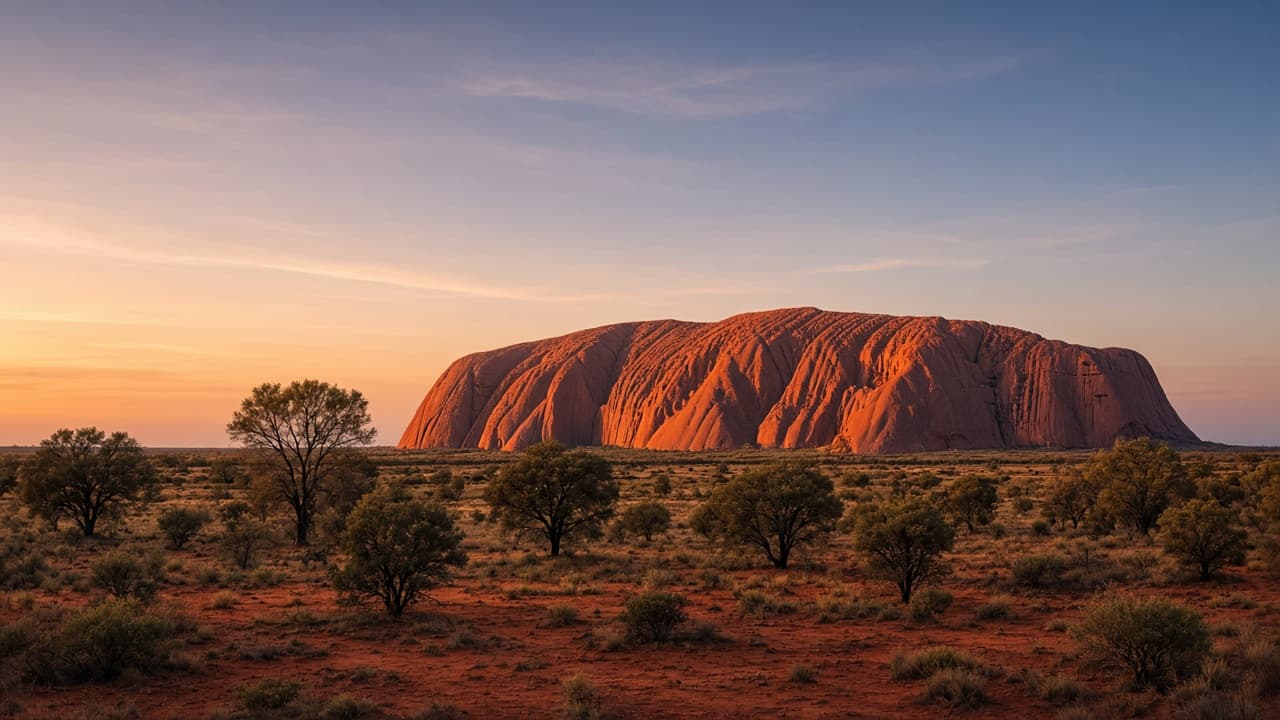
The Reef is visitable in many months; water clarity, swell and stingers vary. The Red Centre is extreme in summer heat and surprisingly cold at night in winter. Whale seasons on different coasts are state tourism and parks stories (for example Hervey Bay’s published window is not Broome’s). We will not collapse them into one sticker.
School holidays in Australia, China, Europe and North America stack differently. We do not print a price spike. We tell you to look at the calendar of the country you live in and the state you will land in.
Reading When to go: north versus south against official pages
If a ranger, a Home Affairs officer or a state road sign disagrees with a sentence here, they win. When to go: north versus south changes when a track closes, a cyclone season starts, or a visa instrument is updated. Bookmark the park and agency URLs the week you travel, not the week you daydream.
Internal links from this page (destination hubs) are the rest of the e-guide’s answer. Use them instead of opening twenty tabs of unnamed “top 10” listicles. The historic PHP file for this slug was a stub or a directory listing. This essay is the replacement.
Distances in Australia punish optimism. A line on a map that looks like a morning drive can be a dawn-to-dusk sealed road with kangaroos at dusk and no fuel in between. Build empty afternoons into every week. The itinerary hub is written as shapes for that reason.
Biosecurity and parks both ask you to be boring: declare food, stay on the track, do not feed wildlife, do not fly a drone where the sign says no. DAFF and the relevant parks agency publish the current wording. We will not paraphrase a fine.
Traditional Owner names, joint management notes and visitor protocols belong on the park page. We use official language. We do not offer a paid smoking ceremony or a fake “secret spot”.
What this e-guide will not print
Live hotel rates, barge clocks, “from $99” widgets and league tables of tours. Operators change those figures. We describe the landscape and point at the agency page. If a number is on this site, it is a public inscription date, a visa subclass, an emergency number, or another fact you can open on a .gov.au URL.
How we keep this guide honest
Every numeric claim on this page is meant to be opened on a government or parks URL. Visa subclasses 601, 651 and 600 live on Home Affairs. World Heritage counts live on DCCEEW (21 properties as of 16 July 2025) and UNESCO’s state-party list. Climate patterns live on the Bureau of Meteorology. Emergency services live on Triple Zero (000). Biosecurity lives on the Department of Agriculture, Fisheries and Forestry. If our sentence and their sentence diverge, delete ours.
Distances, days and the temptation to stack
First-time visitors still try to see Sydney, the Reef and Uluru in seven nights because a map is not a clock. The east-coast itinerary guide is a shape for a fortnight. The Red Centre guide is a shape for a week that includes dawn. Driving Australia is a left-side, fatigue and fuel essay. None of those pages will sell you a seat.
Heritage URLs
PHP activity files such as australia-snorkelling.php and australia-driving.php 301 into these guides or into destination hubs. That is one redirect, not a chain. Clean WordPress paths such as /travel-advice/ and /australia-car-rental/ stay.
What you should do this week, not this year
Open the visa finder for your passport. Open BOM for the month you will actually land. Open the parks page for the walk you think is casual. Pack a declaration habit for DAFF. Then read the destination hub for the city you will sleep in. That order prevents most ruined Tuesdays.
Tone
We write in Australian English, in complete sentences, without invented superlatives. Traditional Owner names follow park and government usage. We do not sell Welcome to Country. We do not invent a “number one” snorkel pontoon. We do not quote a campervan bond.
Why this still belongs on the map
First sentences you can quote
Each section opens with the fact, then the source, then the caveat.
No live prices
If a figure can move next Tuesday, it is not on this page.
What visitors always ask
Do you publish live prices?
No. Operators and agencies change fares. We describe the trip and link the official page.
Where do visa rules live?
On the Department of Home Affairs visa finder and the subclass pages for 601, 651 and 600.
Can I treat this as legal or medical advice?
No. Visas, biosecurity, health and driving law belong on agency pages and, where needed, on licensed professionals.